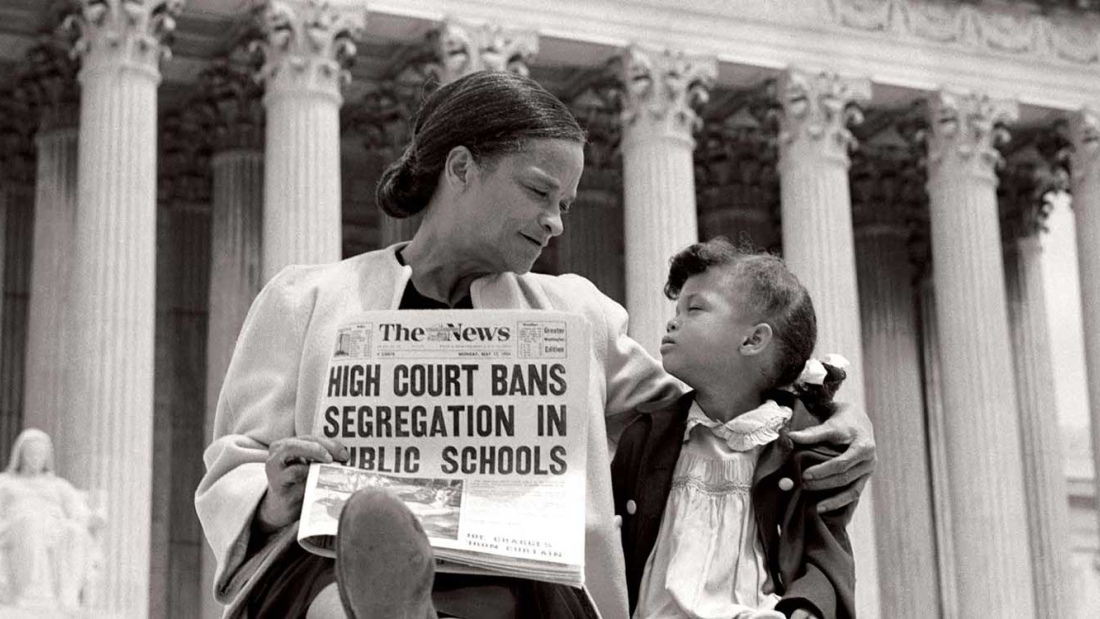
Brown v. Board: Both Sides of the Equation
In class, we learned that Brown v. Board of Education began when the parents of a young student, Linda Brown, sued the public school system for segregation under the Equal Protection Clause of the 14th Amendment. Their argument was that having separate schools for Black and white students violated their daughter’s constitutional rights. The full case, decided in 1954 by the U.S. Supreme Court, can be explored through the Oyez website’s case summary of Brown v. Board of Education (https://www.oyez.org/cases/1940-1955/347us483). While today this decision is widely seen as a major victory for civil rights, at the time there were serious arguments made on both sides, as we saw in our in-class Mock Trial.
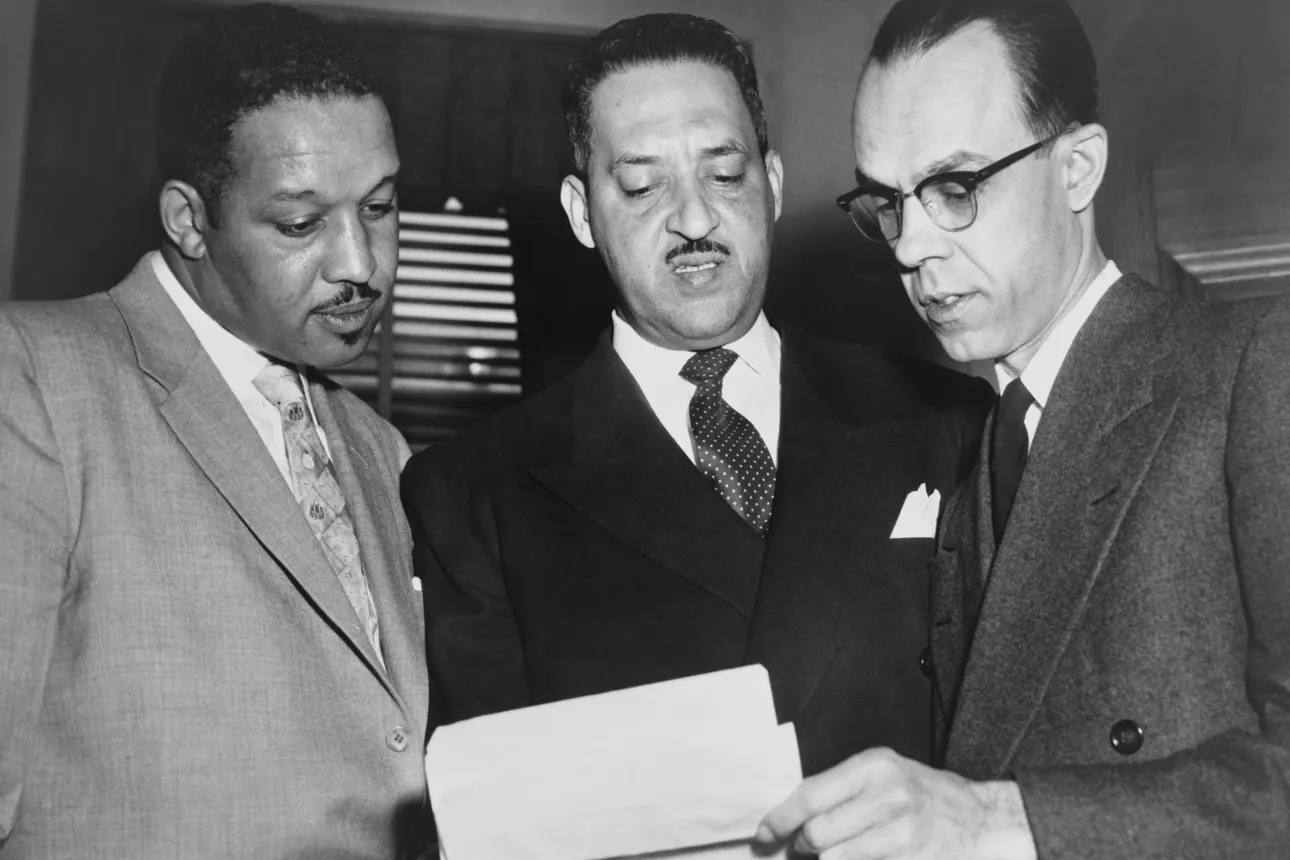
The strongest argument for Brown v. Board was that segregation itself is inherently unequal. Even if schools appeared equal in funding or facilities, separating students by race sent the message that Black students were inferior, which harmed students psychologically and limited future opportunities. The NAACP Legal Defense Fund, which led the case, argued that “separate but equal” under Plessy v. Ferguson was a legal fiction that did not match reality. In practice, most Black schools were overcrowded, underfunded, and lacked basic resources. From a constitutional standpoint, supporters argued that segregation clearly violated the Equal Protection Clause by treating citizens differently based solely on race.
On the opposing side, defenders of segregation argued that Plessy v. Ferguson (1896) had already established “separate but equal” as constitutional law. The original Plessy ruling can be found through the National Archives (https://www.archives.gov/milestone-documents/plessy-v-ferguson). They also argued that states should have the right to control their own school systems without federal interference. Some claimed that segregation reflected tradition and local customs, rather than discrimination. Others warned that forced integration would lead to social unrest and disrupt education across the South. There was also fear that overturning segregation would weaken states’ rights and expand federal power too far.
Looking back as a college student today, it is clear that Brown v. Board of Education was both morally and constitutionally necessary. Although resistance was intense and change was slow, the decision laid the foundation for the Civil Rights Movement and permanently reshaped how equality is defined in the United States.
AI Disclosure: For this blog post, I used ChatGPT to create something that is easy to comprehend and his polished in a form in which is far more organised than before. ChatGPT was used as it is the AI tool in which expands best into more controversial topics. From the notes I took in class came this AI enhanced post so that every reader can truly take it in and enjoy it.


No comments:
Post a Comment