Tuesday, December 9, 2025

Final Post


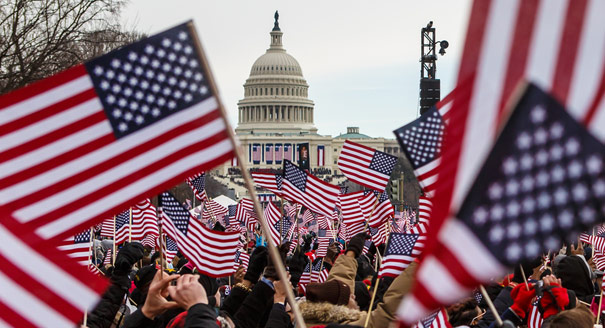
The Meaning of the Colors on the American Flag | Flags USA


Redefining Freedom: What Reconstruction and the Progressive Era Taught Me—In History and Beyond


For my final project in Talking About Freedom, my partner Oliver and I explored two of the most transformative periods in U.S. history: the Reconstruction Era and the Progressive Era. While these eras are often taught separately, bringing them together in a single presentation helped me see how deeply connected the struggle for freedom has always been in America. Reconstruction reshaped the nation in the aftermath of the Civil War, while the Progressive Era confronted the challenges of industrialization and inequality decades later. Together, they permanently changed how Americans understand citizenship, government power, and individual rights. 

Our Progressive Era timeline began in 1890 with the Sherman Antitrust Act, the first major attempt by the federal government to rein in monopolies and protect consumers (National Archives, https://www.archives.gov/milestone-documents/sherman-anti-trust-act). Under President Theodore Roosevelt’s Square Deal, the government took a more active role in regulating businesses, protecting workers, and conserving natural resources. The tragic Triangle Shirtwaist Fire of 1911 forced the nation to confront unsafe working conditions and led to sweeping labor reforms (History.com, https://www.history.com/topics/early-20th-century-us/triangle-shirtwaist-fire). The era also expanded democracy with the 16th and 17th Amendments, and in 1920, the 19th Amendment secured women’s right to vote.

What Is Happening to the United States? | Carnegie Endowment for  International Peace

Our Reconstruction timeline began in 1865 with the 13th Amendment, abolishing slavery. That same year, the Freedmen’s Bureau was established to help formerly enslaved people adjust to freedom. The 14th Amendment granted citizenship in 1868, and the 15th Amendment protected voting rights in 1870 (Library of Congress, https://www.loc.gov/classroom-materials/abolition-and-slavery/reconstruction/). However, the Compromise of 1877 effectively ended Reconstruction, allowing many of these gains to be weakened in the South. 

Looking at both eras together made it clear that freedom in the United States has always been contested and incomplete. Reconstruction centered on legal freedom and citizenship for formerly enslaved African Americans, while the Progressive Era focused more on economic justice, workers’ rights, and consumer protection. In both periods, the federal government expanded its power in response to national crises, and in both periods, resistance—from the KKK to powerful industrialists—pushed back against reform.

Beyond the history itself, what may stay with me the most is what this class taught me about learning. I am genuinely thankful for how Talking About Freedom strengthened my note-taking, presenting, and academic writing skills. I learned how to organize ideas clearly, defend arguments with evidence, and communicate confidently in front of others. Just as important, I learned the value of good-spirited debate—how disagreement can be productive, respectful, and even empowering when everyone is committed to learning.

This project showed me that freedom is not a fixed idea but something each generation has to redefine and fight for. At the same time, this class helped me grow not just as a student of history, but as a thinker, speaker, and writer. For that, I am incredibly grateful. Thank you to Professor Smith, and thank you to my incredible classmates, it has been a great journey this semester.

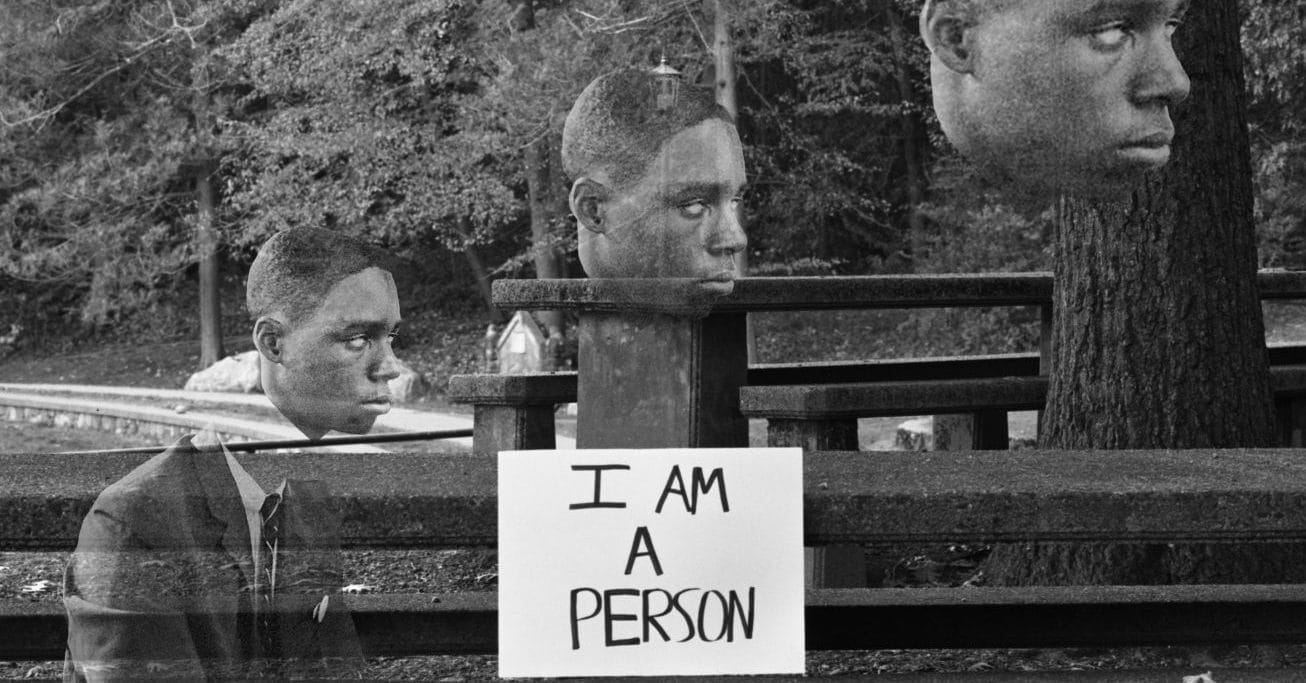
My EOTO Group Reflection (Key Post)


The Civil Rights Movement haunts us even today


Progress Paid in Blood: The Violent Backlash to the Civil Rights Movement

After looking back at the slides on the violent backlash to the Civil Rights Movement that my EOTO group and I reviewed and went over, I was struck by how intense and organized the resistance to equality truly was. We often learn about the movement through its victories—especially Brown v. Board of Education (1954), which ended legal school segregation (https://www.oyez.org/cases/1940-1955/347us483). But these slides shift the focus to the dangerous opposition that followed. They show that while progress was being made in courtrooms, real life was filled with violence, fear, and intimidation for those pushing for change.

One of the most disturbing parts of the presentation was the resurgence of the Ku Klux Klan during the 1960s. As African Americans gained legal victories, extremist groups responded with violent intimidation, propaganda, and public rallies. The KKK even infiltrated local governments and law enforcement in some areas (https://www.history.com/topics/reconstruction/ku-klux-klan). What shocked me most was learning that some local authorities quietly supported or ignored these attacks. This meant that many civil rights workers were completely unprotected while simply trying to secure basic rights.


The mysterious Klansman imagining a kinder, gentler KKK - The Washington  Post


The section on Freedom Summer (1964) and the murders of James Chaney, Andrew Goodman, and Michael Schwerner was especially powerful (https://www.biography.com/activist/freedom-summer). These young men were trying to register Black voters in Mississippi when they were arrested, released into danger, and then murdered by KKK members in a planned ambush. The FBI investigation, known as “Mississippi Burning,” brought national attention to the case (https://www.fbi.gov/history/famous-cases/mississippi-burning). What stood out to me most was that even though several men were convicted of civil rights violations, justice came slowly and imperfectly. It is disturbing to realize that it took such horrific deaths for the federal government to take strong action.

The concept of “Massive Resistance” also stood out to me. After Brown v. Board, several Southern states—especially Virginia—used laws and political pressure to delay school desegregation for more than a decade (https://encyclopedia.virginia.edu/entries/massive-resistance/). Before seeing these slides, I assumed desegregation happened quickly after the ruling. Instead, I learned that resistance was carefully planned and legally disguised, showing how deeply segregation was defended.

The image of Governor George Wallace “Standing in the Schoolhouse Door” at the University of Alabama in 1963 really stayed with me (https://www.history.com/this-day-in-history/george-wallace-blocks-integration-at-university-of-alabama). A state governor physically blocking Black students from enrolling in a public university represents how powerful political leaders openly fought against equality.

Overall, these slides made it clear that the Civil Rights Movement was not just a story of peaceful progress and success. It was a struggle filled with violence, delay, and sacrifice. As a college student today, it is easy to take my rights for granted. Learning about Freedom Summer, the KKK’s resurgence, and Massive Resistance reminds me that many of the freedoms I enjoy now were paid for with real human suffering. This reflection pushed me to think more seriously about justice today and about my responsibility to not stay silent when inequality still exists.


Wednesday, December 3, 2025

Brown v. Board- Mock Trial Reflection


Brown at 60 and Milliken at 40 | Harvard Graduate School of Education


Brown v. Board: Both Sides of the Equation


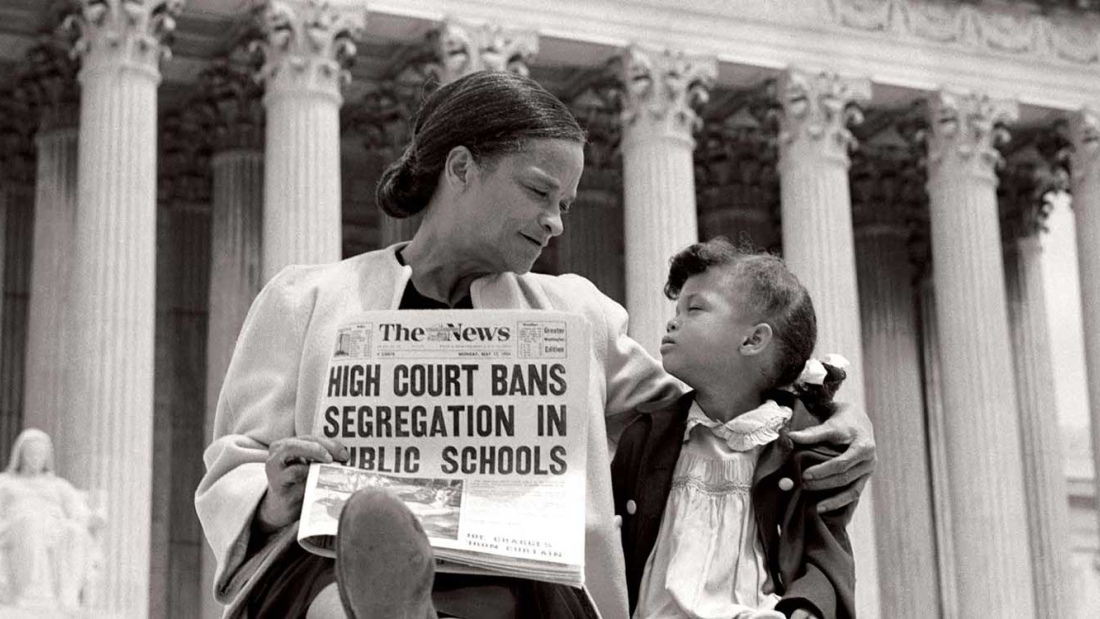
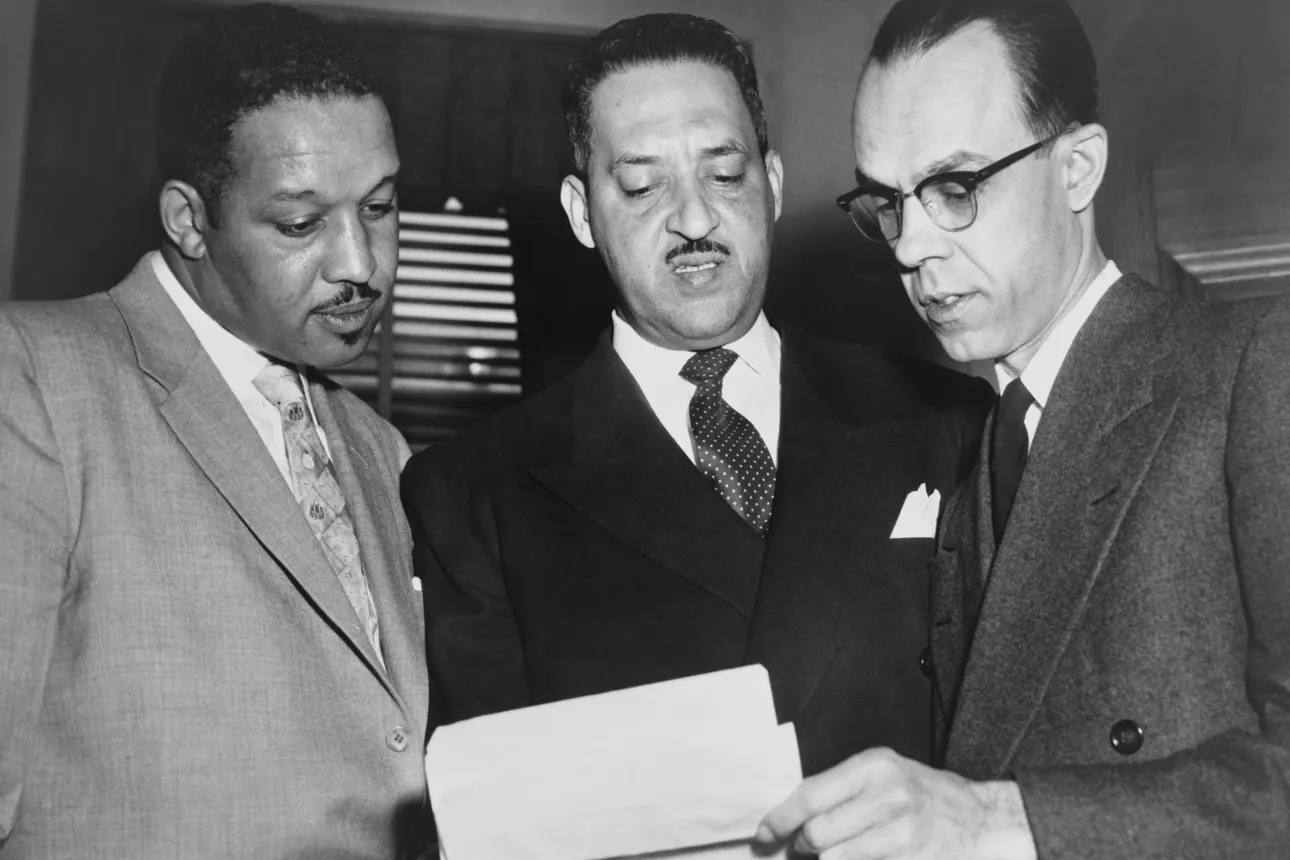
In class, we learned that Brown v. Board of Education began when the parents of a young student, Linda Brown, sued the public school system for segregation under the Equal Protection Clause of the 14th Amendment. Their argument was that having separate schools for Black and white students violated their daughter’s constitutional rights. The full case, decided in 1954 by the U.S. Supreme Court, can be explored through the Oyez website’s case summary of Brown v. Board of Education (https://www.oyez.org/cases/1940-1955/347us483). While today this decision is widely seen as a major victory for civil rights, at the time there were serious arguments made on both sides, as we saw in our in-class Mock Trial.


70 years later: The story of Brown v. Board of Education in pictures | K-12  Dive


The strongest argument for Brown v. Board was that segregation itself is inherently unequal. Even if schools appeared equal in funding or facilities, separating students by race sent the message that Black students were inferior, which harmed students psychologically and limited future opportunities. The NAACP Legal Defense Fund, which led the case, argued that “separate but equal” under Plessy v. Ferguson was a legal fiction that did not match reality. In practice, most Black schools were overcrowded, underfunded, and lacked basic resources. From a constitutional standpoint, supporters argued that segregation clearly violated the Equal Protection Clause by treating citizens differently based solely on race.

On the opposing side, defenders of segregation argued that Plessy v. Ferguson (1896) had already established “separate but equal” as constitutional law. The original Plessy ruling can be found through the National Archives (https://www.archives.gov/milestone-documents/plessy-v-ferguson). They also argued that states should have the right to control their own school systems without federal interference. Some claimed that segregation reflected tradition and local customs, rather than discrimination. Others warned that forced integration would lead to social unrest and disrupt education across the South. There was also fear that overturning segregation would weaken states’ rights and expand federal power too far.

Looking back as a college student today, it is clear that Brown v. Board of Education was both morally and constitutionally necessary. Although resistance was intense and change was slow, the decision laid the foundation for the Civil Rights Movement and permanently reshaped how equality is defined in the United States.

AI Disclosure: For this blog post, I used ChatGPT to create something that is easy to comprehend and his polished in a form in which is far more organised than before. ChatGPT was used as it is the AI tool in which expands best into more controversial topics. From the notes I took in class came this AI enhanced post so that every reader can truly take it in and enjoy it.


Tuesday, November 18, 2025

In the Heat of the Night: Reflection

In the Heat of the Night: My Reflection


I watched In the Heat of the Night and it felt less like watching a period crime drama and more like being dropped into something far more riveting: the murder mystery propelled the plot, but the real heat comes from the town’s social dynamics. The film’s spare, character-driven storytelling keeps the focus on people (such as their silences, their looks, their loaded conversations) rather than on melodrama, which made the whole thing feel more raw and surprising. For a quick production overview and cast information, there is a TCM entry for it. Turner Classic Movies

Sidney Poitier’s Virgil Tibbs is subtle and magnetic: he brings composure and procedural skill to a place where both are routinely denied to him. The movie never reduces Tibbs to a symbol; he’s a professional whose dignity becomes a form of resistance. The film’s most famous moment — “They call me Mister Tibbs!” — still lands as a direct demand for recognition, not declaration. That line and Tibbs’ placement on AFI’s lists show how culturally significant the role became. imdb.com+1

Rod Steiger’s Chief Gillespie is kind of like a double agent: not a cartoon villain, but a man squeezed by expectations, prejudices, and local politics. The interplay between Tibbs and Gillespie is the driving point of the film; it’s less about a single climactic conversion than a series of small, consequential happenings. The film trusts the audience to notice those smaller shifts — a look, a concession, a reluctant respect — which is why the relationship development feels earned rather than flat out taken. The Criterion essay unpacks this “double bind” the film sets up so well. The Criterion Collection


Stylistically, Norman Jewison uses the town as an active force: Sparta’s streets, diners, and factories press against Tibbs at every turn. The cinematography and production choices make the setting feel oppressive without ever becoming welcoming in the slightest; the result is an atmosphere of suspicion that permeates the whole film. The movie’s wonky moral geography — who is trusted, who is suspect, who is allowed to speak — is what makes the mystery more than a genre drag. Recent home-video restorations and long-form reviews explain how the film’s craft keeps it feeling urgent even now. Ultra HD High Def Digest+1

Historically, the film landed at a pivotal moment and was recognized by the Academy, winning Best Picture and acting honors, which only amplified its cultural footprint. That recognition didn’t cleanse the film’s difficult subject matter; instead, it pushed the questions the movie raises into a national conversation. For the official record of the ceremony and awards, see the Oscars archive. Oscars

Ultimately, what stays with me is the film’s restraint: rather than clobber viewers with rhetoric, it relies on character, silence, and sustained tension to ask difficult questions about identity, authority, and justice. As a college student thinking about representation and narrative power, I found the film both a compelling artifact of its time and a sharp mirror for our present debates about who we believe and why.


Friday, October 31, 2025

EOTO #2 Reaction Post


The Reconstruction Era: Freedom, Progress, and the Struggle for Equality


Following the Civil War, the United States entered the Reconstruction era — a period defined by progress, resistance, and transformation. The 13th Amendment (1865) legally abolished slavery, declaring that “neither slavery nor involuntary servitude shall exist.” Yet, while it ended slavery, it didn’t guarantee equality. The 14th Amendment (1868) went further, granting citizenship to all people born in the U.S. and promising “equal protection under the law.” Still, many states ignored its intent. Finally, the 15th Amendment (1870) gave Black men the right to vote — a major democratic step, though states soon found ways to undermine it through poll taxes and literacy tests.

To support the newly freed population, Congress created the Freedmen’s Bureau in 1865 — the first federal welfare agency. It established over 4,000 schools, founded HBCUs, provided legal protection through hundreds of thousands of court cases, and helped reunite families torn apart by slavery. Meanwhile, Special Field Order No. 15, known as “40 acres and a mule”, promised economic independence by redistributing land to freed families. However, President Andrew Johnson reversed the policy, forcing many back into poverty and sharecropping — a system that kept racial inequality alive for generations.


Education became a pathway to empowerment. The Tuskegee Institute, founded in 1881 by Booker T. Washington, trained students in both academics and skilled trades, with figures like George Washington Carver advancing agricultural innovation.

Reconstruction also saw groundbreaking Black political leaders like Hiram Rhodes Revels, the first African American U.S. Senator, and Joseph Rainey, the first Black Representative. Both men fought for equality, civil rights, and reconciliation — leaving legacies that continue to shape the fight for justice today.

Though the Reconstruction era ended in 1877, its impact continued to shape the nation’s identity. The promises of freedom and equality were only partially fulfilled, as systemic racism and segregation took root in the decades that followed. Still, the foundations laid during this time — from the constitutional amendments to the establishment of schools and Black political leadership — created pathways for future progress. The struggles and accomplishments of Reconstruction proved that real democracy requires constant effort and participation. Even today, the era serves as a reminder that the fight for justice and equality in America is ongoing, demanding courage, persistence, and an unshakable belief in the nation’s founding ideals.

AI Disclosure: This post is based on the notes I took while observing two EOTO presentations. As it is well known by now, my favorite AI to use is ChatGPT becasue it is capable of tackling any subject matter that you throw at it. With this being said, the AI polsihed my notes and turned it into an organized and informative blog post.


My Mock Trial Subject Post


Defending “Separate but Equal”


The 1896 Supreme Court case Plessy v. Ferguson stands as one of the most controversial decisions in American history, shaping racial policy in the United States for over half a century. The case originated in Louisiana, where Homer Plessy, a man of mixed racial heritage, deliberately violated the Separate Car Act of 1890 by sitting in a whites-only railway car. Plessy argued that this law violated the Fourteenth Amendment’s Equal Protection Clause, while the state defended it as a legitimate exercise of its authority to maintain public order. The U.S. Supreme Court ultimately upheld the law, establishing the infamous “separate but equal” doctrine that legalized racial segregation until Brown v. Board of Education (1954) overturned it.

For a recent mock trial assignment, I was tasked with taking the position of Louisiana’s representative, defending the constitutionality of the Separate Car Act. My argument reflected the historical reasoning used by the state and the Court at the time.

“May it please the Court, I rise today to defend the constitutionality of Louisiana’s Separate Car Act of 1890, which mandates equal but separate accommodations for white and colored citizens on railway coaches. This statute is not born of hostility, but of a legitimate exercise of the state’s police powers to preserve public order and promote the comfort of its people.”

This opening statement echoed the reasoning of the majority opinion written by Justice Henry Billings Brown, who claimed that segregation did not imply the inferiority of African Americans. He emphasized that the Fourteenth Amendment guaranteed political and legal equality, not social equality. Using precedents like The Slaughter-House Cases (1873) and Hall v. DeCuir (1878), my argument highlighted that the Court had historically deferred to states’ rights when it came to regulating social behavior and public conduct.


One of the most persuasive historical references was Roberts v. City of Boston (1849), a Massachusetts decision that upheld segregated public schools so long as facilities were “equal.” This idea of “reasonable classification” underpinned my defense: segregation, I argued, was not discrimination but a reflection of prevailing social customs aimed at maintaining peace and comfort.

“Segregation is not discrimination. It is a recognition of existing social customs and a means to prevent conflict. The law does not imply inferiority of either race. It merely acknowledges that the preservation of peace and public comfort may require separation in certain public spheres.”

Writing and performing this argument forced me to grapple with how legal reasoning can uphold systems of inequality. From a modern perspective, it’s clear that the “separate but equal” doctrine was a veneer for racial subordination. Yet at the time, it was seen as a rational, constitutional solution to social tension.

Ultimately, Plessy v. Ferguson reminds us that legality and morality do not always align. While my mock trial defense mirrored the state’s logic, the exercise illuminated how deeply flawed that logic was. Laws may claim neutrality, but as history shows, neutrality can often serve as the mask of injustice.

AI Disclosure: This blog post was developed with assistance from OpenAI’s GPT-5, which helped with drafting and editing for clarity, tone, and historical accuracy. All final ideas, interpretations, and edits are my own. Considering the subject matter, GPT-5 is the only AI program that would give me a thorough post. 


Final Post

Redefining Freedom: What Reconstruction and the Progressive Era Taught Me—In History and Beyond For my final project in Talking About Freedo...